
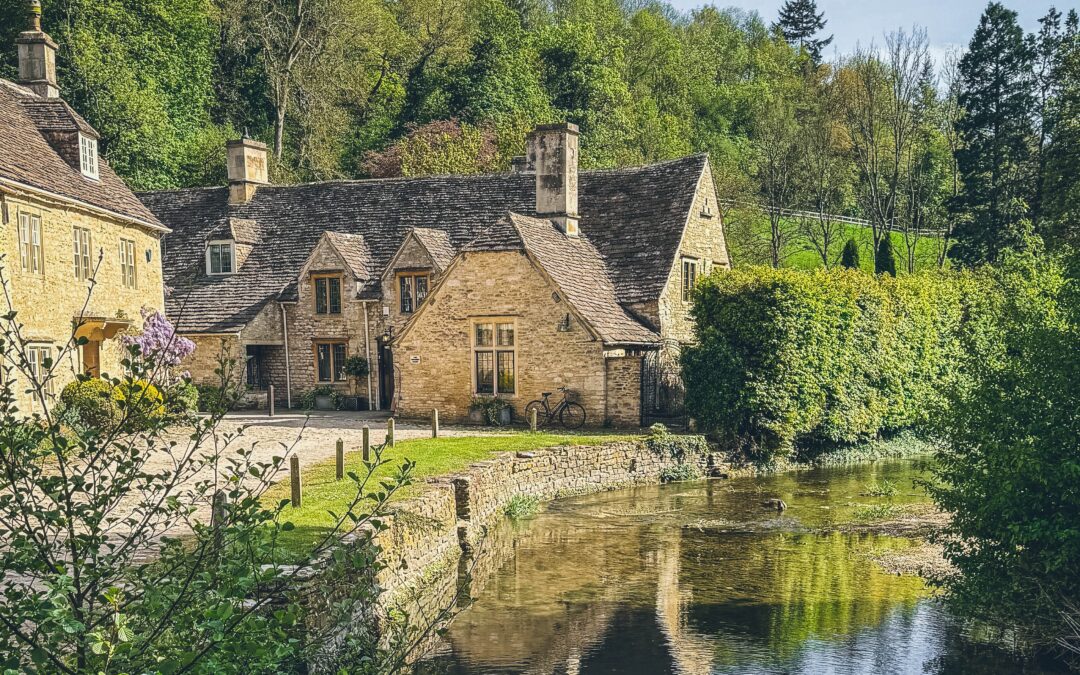
England's most charming region spans several counties in central and southwestern England and is protected as the Cotswolds National Landscape. What makes it special is not only that its towns are beautiful. The thing is that here the landscape and the architecture form a solid aesthetic whole: the same stone in the houses, in the churches, in the walls and in the old farms.
Of course, if you don't want to travel by car you can do it by public transport by bus or train. There is a train station that links some of the most important towns in the region with the Cotswold Line of the Great Western Railway which connects Oxford with Glocester with 8 different stops. There are also bus routes that you can confirm at the town hall of each town you stop at, although as I say, making the trip this way will mean having to invest more time or be able to vote for fewer places than if you do it by car.
You can also walk because the Cotswolds have the Cotswolds Way (the Cotswolds Way) with more than 160 km of trail part of the National Walking Trail between Chipping Campden and Bath that offers incredible views and extraordinary scenery along its route.
I will also tell you that it is a region known for its restaurants since great chefs who have risen to the top in London return to their origins in this region offering a very high quality of food. Here everything is slow, a slow food that seeks zero km, proximity and good product. For this reason, it is essential to reserve especially for dinner, and even more so if you are going to have dinner at the hotel where you are staying.
I assure you that there is nothing more comforting than arriving from your day on the road to your hotel and being able to have dinner and have a drink without moving after having been there all day without stopping, which is why hotel restaurants usually fill up, so I recommend that you reserve a hotel and restaurant for dinner as soon as possible. Lunchtime is not a problem because they usually have a very wide range of food in the pubs, which are always a good option.
And now we continue with this wonderful road trip or car trip that we liked so much.

Sexta etapa: Lower y Upper Slaughter - 5 km
After spending the day seeing wonders in this area, we arrived at two of the smallest and most special towns of our trip.
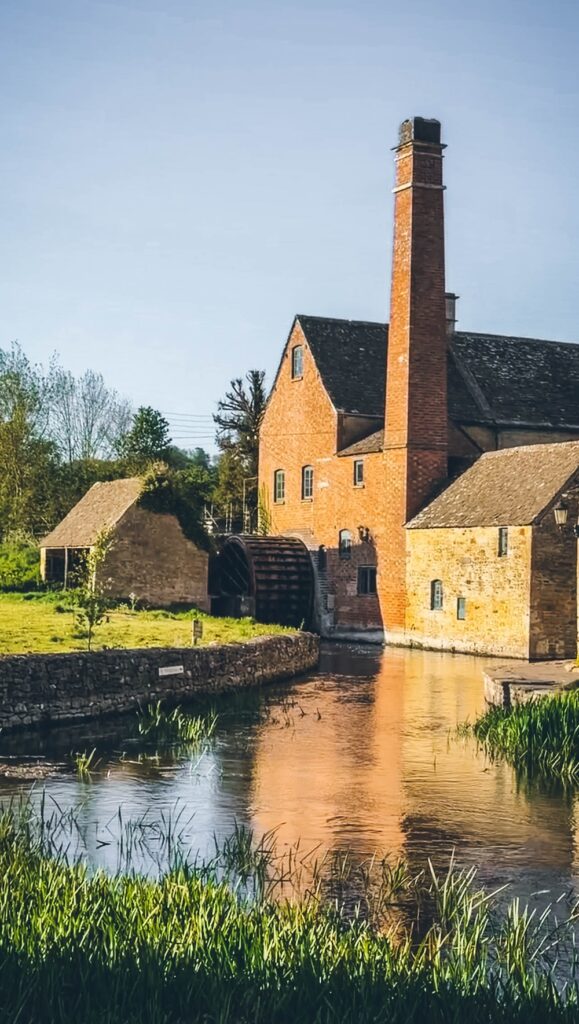
Lower Slaughter is built around The Eye River. The water flows through the village and passes stone houses, small bridges and the old mill, which although no longer in operation, is one of the most recognizable buildings in Lower Slaughter.
Its Copse Hill Road, the main street along the river, was officially chosen, in a national competition, as the most romantic street in Britain in 2011.
And less than two kilometers away is Upper Slaughter, even smaller and much quieter. We walked the Warden's Way that runs between the two towns at sunset, enjoying the landscape, how beautiful the houses are, the bridges that cross the river and the feeling of being in a place from another time. In fact, no new houses have been built in these towns since 1906.
However, when we almost reached Upper Slaughter, the road was closed so we had to turn around and take the car. There are far fewer tourists here.
We wanted to have afternoon tea at The Slaughters Manor House, but we were running late for the dinner we had reserved at the restaurant of our next hotel.
Séptima etapa: The Double Red Duke - 30 km
The Double Red Duke It is one of those hotels that you fall in love with as soon as you see it. Its characteristic red color on the umbrellas at the entrance announces a hotel with a lot of history that would conquer my heart.
The building was built around 1660, originally as a country house, and in the 19th century it was converted into an inn, so it was the first time we slept in an old English inn with several centuries of history.
It is located a few minutes from Bampton, the town that became Downton for the series Downton Abbey. In fact, The Double Red Duke was sometimes during filming, hosting actors and crew members.
We had dinner in the old greenhouse: crab and stracciatella brioche, cheese soufflé with mustard and, for dessert, sticky toffee pudding. Everything spectacular. The restaurant is located in the greenhouse of the old inn, which at night becomes a candlelit restaurant and, in the morning, the breakfast room, ideal, with lots of light and perfect for starting the day with strength.
Here the Sunday Roast is an eminence and one of the best in the Costwolds

Eighth stage: Burford - 13 km
Burford is often called “the gateway to the Cotswolds”. It is in Oxfordshire, on a hill next to the River Windrush, and is a true medieval town. You cannot miss the church and cemetery of St. John, the park and the bookstore.
The High Street runs down the hill and is lined with old merchants' houses, shops and historic buildings. It is a wonder especially if you catch it with stopped cars. Here the doors, windows, roofs and chimneys are unique.
We loved The Madhatter bookstore.
We walked into the Davenford cafeteria and I could have eaten the whole thing. Lemon sponge cake is the king of the area, along with rhubarb and cherry sponge cakes. We had the Lemon Slice made with lemon jam and a traditional scone with homemade cream and jam. We also really liked Hugo Lovage Patisserie, run by a couple trained in Michelin-starred restaurants, which is perfect for both sweets and something to take with you at mealtime.

Novena etapa: Bourton-on-the-Water - 15 km
Bourton-on-the-Water is probably the best known of all the towns we have visited and the most picturesque. We were here for the first time 12 years ago and nothing has changed since then. It is a town with many water canals and that is why they call it the little Venice of the Cotswolds, but being one of the most beautiful it is also one of the busiest. If you can choose, go in winter or like us, at the beginning of spring when there are not so many tourists yet, and if you have no choice but to go in high season, then try to get up early because it is very worth it to see it in peace.
It has been the setting for some James Bond films and is one of the most recognizable images of The Cotswolds. It is crossed by the River Windrush, which passes through the center of the town between small limestone bridges. Together with its houses they practically form a fairy tale postcard although it is also the town where tourism is most noticeable. If you go during high season, it is worth taking this into account.
If you go in summer, don't miss Football in the River, one of the summer events: a football match played inside the Windrush River on the last Monday in August.
We loved Cotswold Perfumery, a small perfume shop that makes their own fragrances and has hard to find brands. We had NOT booked so we couldn't stay but if you like the perfume world, it is an activity to add to your route.
As for pastries, we went to The Cornish Bakery and Bakery on the Water, which is perfect for having bread, scones or sitting for a while and drinking coffee. We wanted to eat at the Dial House Hotel and Restaurant, but I ate the sweets before, so it will be another time, but it looked very good.
Tenth stage: Bibury - 20 km
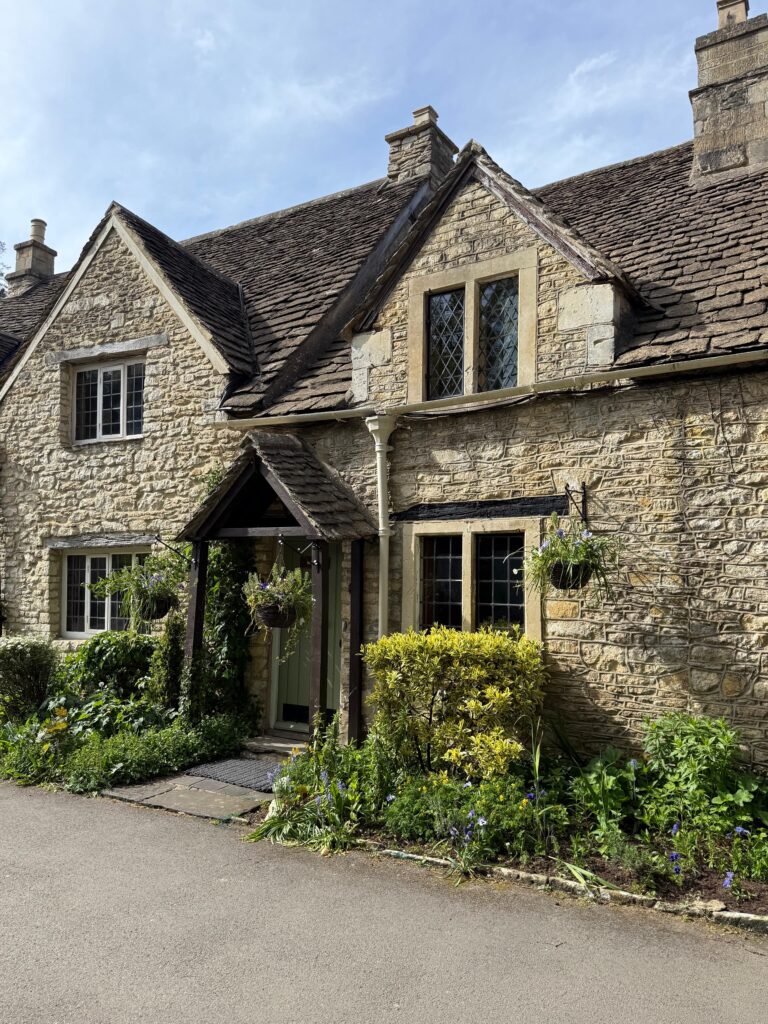
Bibury is probably the most photographed town in all of The Cotswolds and its visual heart, although it is also the busiest for tourists.
It is next to the River Coln and Arlington Row Street, one of the most beautiful in the region that dates back to the 14th century and which, like almost everything in this region, has its origin in the wool trade in the Middle Ages. The street has a row of small stone houses that were originally a medieval wool warehouse and were later transformed into homes for weavers.
Today it is one of the best-known images of traditional English architecture and William Morris even described Bibury as one of the most beautiful towns in England. As a curiosity, I will tell you that it appears on the back cover of British passports.
They recommended afternoon tea at the Swan, but we didn't have a reservation and there was no space, so we didn't have anything. Next time I want to go back in winter. It was the time of our first visit and I think I prefer it to spring because it looks really magical with the clouds and the cold.

Eleventh stage: Castle Combe - 48 km
And so we arrive at the last point of our route. Castle Combe, the town that stole my heart and to which I already dream of returning.
The parking lot is signposted to the north and from there you can walk down. DO NOT forget to pay the parking lot. They have an app for this so it is very easy and we avoid fines, which will be delivered to your home safely through the car rental agency.
It is a very small town and very well preserved. In fact, practically no new houses have been built in its historic area since around 1600. The street that runs down to the river, the stone houses that cover the village with their gardens and the old market are the elements that have made Castle Combe one of the most recognizable places in The Cotswolds.
Castle Combe is part of the so-called “Celebrity Triangle” of the Cotswolds, where many stars have their rural retreats: the Beckhams, Hugh Grant, Patrick Stewart and Liam Gallagher have fallen in love with its beauty.
It has also served as the setting for different film productions, precisely because it preserves a historical image that is very difficult to find elsewhere.
If the weather is nice, you can go to The Little Picnic Shop, where they prepare boxes of afternoon tea to take away, which you can have after taking a walk around the surroundings.
You can't get lost The Manor House, a hotel that is truly wonderful and the perfect excuse to eat, have a coffee or, if you are very lucky, stay the night. We didn't do it because it was late and we had to continue to Bristol, but it's definitely planned for next time. Yes we entered the Castle Inn, which has a pub open seven days a week with very good looking food. We had a drink and said goodbye to the Cotswolds to continue to Bristol.






 Español
 English
 Français