

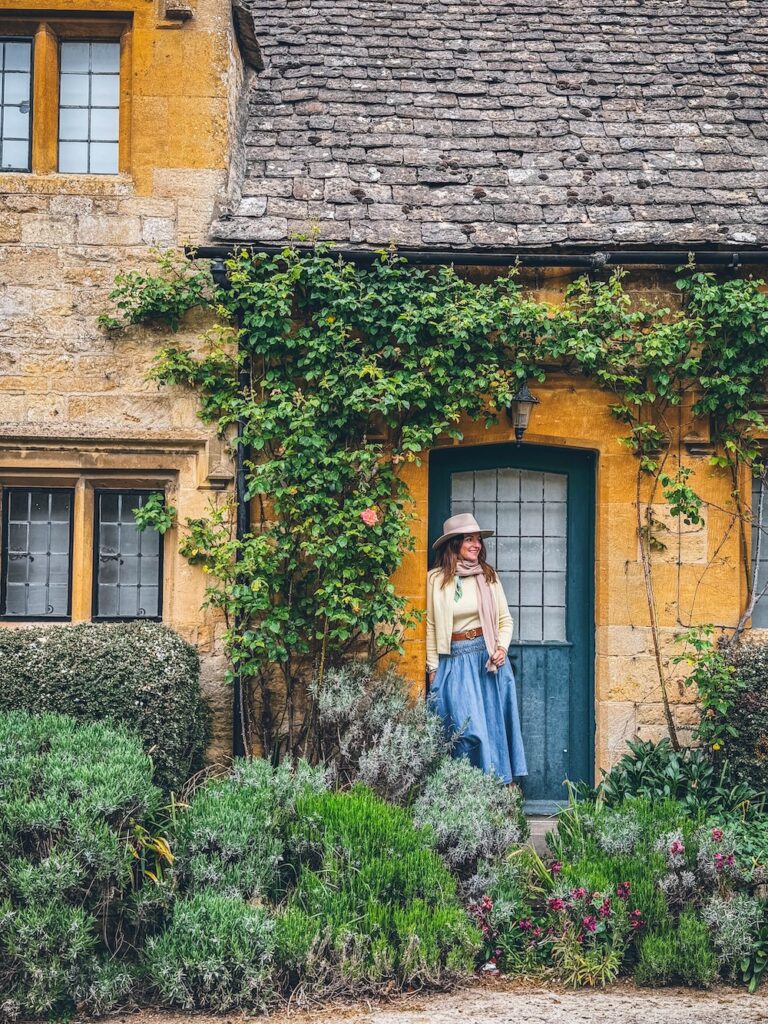
There is an England that has nothing to do with London or big cities. An England of narrow roads, stone walls, endless meadows and houses built with that golden limestone that changes color depending on the light. That England is The Cotswolds, one of the most beautiful regions in Europe that I have been lucky enough to know.
England's most charming region spans several counties in central and southwestern England and is protected as the Cotswolds National Landscape. What makes it special is not only that its towns are beautiful. The thing is that here the landscape and the architecture form a solid aesthetic whole: the same stone in the houses, in the churches, in the walls and in the old farms.
During the Middle Ages, The Cotswolds were one of the great wool regions of England. The money generated by the wool trade made it possible to build churches, merchants' houses and markets that are still part of the landscape today.
That's why exploring the Cotswolds by car makes so much sense. It is not so much about reaching a specific monument as it is about going from one town to another, seeing how the landscape changes, admiring the sheep that populate the roads and little by little understanding why this area has become one of the most recognizable images of rural England.
One of the reasons why The Cotswolds retains its unique appearance is that not only individual buildings are protected, but also entire historic sites and the landscape that surrounds them. Any new home or extension has to go through an extremely demanding urban planning process. Therefore, in towns like Bibury, Stanton or Castle Combe, it is difficult to find modern buildings that break the continuity of traditional architecture.
It is a place to explore without rushing, to enjoy a coffee here, a pastry there, a meal in a pub or a dinner in a good restaurant, because there are some, and all without rushing.
The closest airport is Bristol, although we went from London because we had spent a few days there before our road trip. To move freely, it is best to rent a car, because although you drive on the left, you will quickly get the hang of it and you will have total freedom to move and make stops depending on what you want most. We don't rent it in the center of London but if you fly to make the route it is better to rent it at the airport and keep in mind that you must fit your luggage in the trunk. This way you can make stops without fear of your luggage being seen in the parked car.
Parking in almost all towns is paid, so to avoid fines (if you get one, it comes through the rental agency), make sure you pay the hourly ticket. You can pay by card and in almost all of them there is an App to download and pay via mobile phone. You don't need cash to pay at least in any of the car parks where we pay.
And how many days did we spend? I would say three days is a perfect length for this route, leisurely touring the beautiful towns in the area. To stay you have different options depending on your budget: Bed & Breakfast, a traditional cottage or a Manor which are luxury hotels located in historic buildings where you will go back centuries.
To eat, don't miss the Sunday roast in one of its Manor or pubs, a typical dish of British cuisine related to the celebration of Sundays, and one of the most representative icons of "Merry England." The dish consists of a kind of roast meat (pork, beef, lamb or chicken) accompanied by potatoes, Yorkshire pudding and chipolata sausages (thin, long breakfast sausages).
You have many food options depending on your budget, but if you can, don't miss having an afternoon tea or a Sunday Roast at one of the Manors in the area. It is an experience that you will not forget.
Although at each stop I have given you the cafes, restaurants and pubs that we visited, I leave you an additional list of some of the ones that I had signed up to try.
Cafes:
- The Twig, Bibury
- Bromley's of Cotswolds, Chipping Campden
- Leaf and Bean, Broadway
Regarding schedules, the kitchen of almost all restaurants closes around 8:30 p.m., so you should take this into account for dinners, which are earlier than our usual schedule.
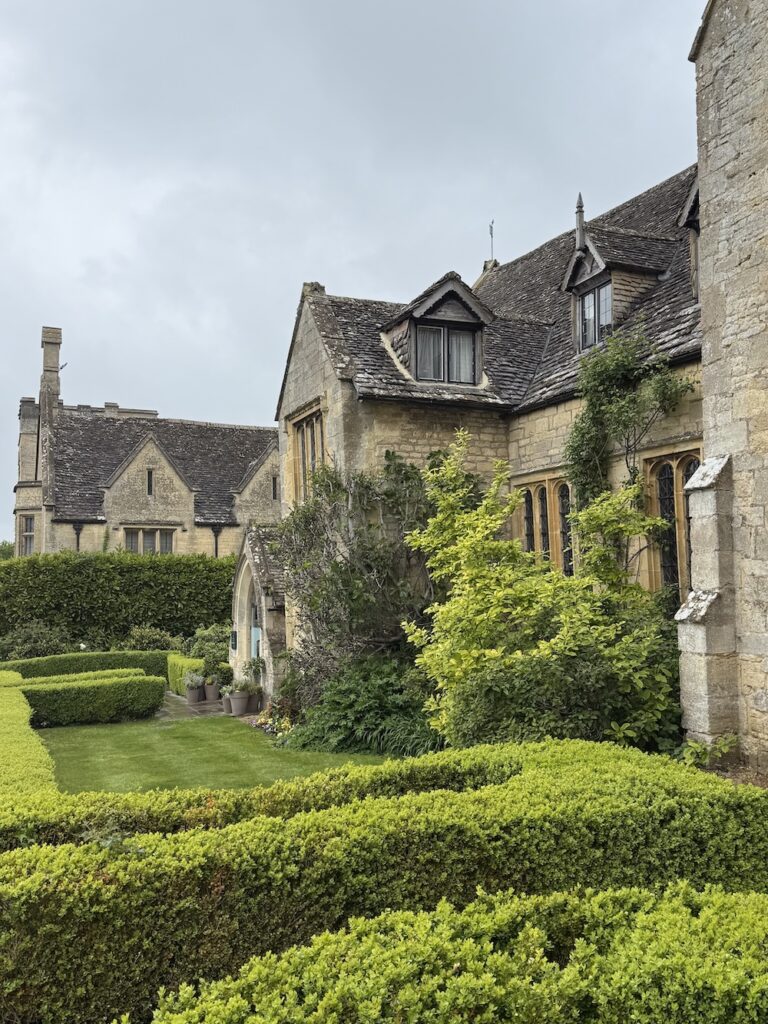
Primera etapa: Londres - Ellenborough Park - 130 km
We leave London heading to The Cotswolds, but the first stop on the trip is Bicester Village, in Oxfordshire, about 95 kilometers from London.
Bicester Village is one of the best-known luxury outlets in England. More than a typical shopping center, it is a small open-air village made up of streets and boutiques of large brands. There are more than 150 brands and, although I wasn't sure if I would compare, a friend told me about it and I wanted to stop.
It is well located on the way to The Costwolds, but after visiting it and not comparing anything, it would have been more worthwhile for me to arrive earlier at the wonderful hotel that awaited us. Even so, I tell you so that you know that you have that option.
After Bicester we continued towards Cheltenham. It is about 35 kilometers to Ellenborough Park, where we spent our first night, a hotel that seems frozen in time but with all the current luxuries and which is truly wonderful.
The main house at Ellenborough Park is over 500 years old and has all the charm of a stately country house in the English countryside. Construction began in 1485, when Thomas Goodman built the first part of what would be the current property.
In 1947 the house became a girls' school and in 1973 it became a hotel. After a major restoration, in 2011 Ellenborough Park reopened as a 5-star hotel where everything surrounds you as if you were in another era. Impeccable service and a place to return to a thousand times: we arrived, left the car and had dinner right there and had their buffet breakfast the next day. We missed hours of enjoyment but I am sure that we will return.
Everything in this hotel takes you back in time and all I needed was a period dress to feel like I was in Downton Abbey. Here you have the videos that I published and that will make you understand everything. Click here


Second stage: Stanton - approximately 30 km
After breakfast we properly begin the drive through the Cotswolds and the first stop is Stanton.
Stanton is in Gloucestershire and is one of those towns where it is perfectly understood what makes this region special: practically everything is built with local stone and there is no building that deviates from traditional architecture. I leave you the video so you can see how wonderful it is. Click here.
It only has 198 inhabitants and 5 km full of houses, gardens and stone walls, in which the architecture has changed very little over the centuries. It is the quietest town of all and, early in the morning, truly beautiful.
It has no cafe options, so we continued along the road to Broadway, our next stop.
Third stage: Broadway - about 5 km
Broadway is practically next door to Stanton, but the change is noticeable immediately.
Its main feature is its main street, a very wide High Street, with a central green area and a succession of honey-colored stone buildings, many of them from the 16th and 17th centuries.
It is one of the most elegant towns and also one of the most visited. It has many shops, stylish pubs, cozy restaurants, galleries and cafes. We entered The Rudds, an ideal store from which I wanted to bring everything. I leave the video to this beautiful town.
It has one of the most popular mansions in this area, Snowshill Manor, and has several museums and art galleries. It is also a stop on the steam railway, which we couldn't take this time due to lack of days, but which we have planned for next time.
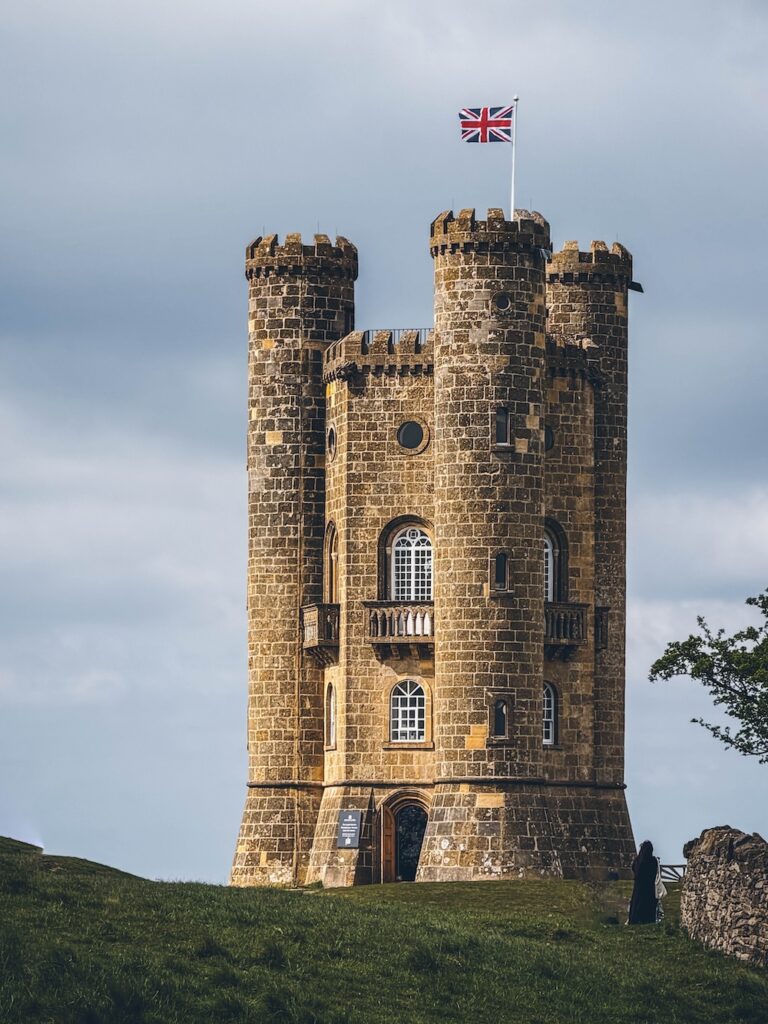
Broadway Tower, an 18th-century hilltop tower, is at one of the highest points in the Cotswolds, overlooking 16 English counties.
This county is the birthplace of Perrins sauce or Worcestershire sauce that I like so much for dressing salads. As for pastries and cafes, we entered, although we did not drink anything, at The Cotswold Larder Cakery and at Otis & Belle, 69A High St., a pastry shop that has several locations in The Cotswolds and where we ordered a Quad Hoc and a cinnamon roll. Delicious.

Stage 4: Chipping Campden - 9km
Chipping Campden is one of the places where the history of the Cotswolds is most evident and has featured in numerous TV series and films.
The town was an important center of the wool trade during the Middle Ages and the great merchants in the area built houses, financed churches and public buildings, and that prosperity is still visible in the architecture.
It has one of the most beautiful High Streets in England, and a market, the Market Hall, built in 1627. As we walked along the street we passed Campden Bakery, a small bakery with freshly baked buns and delicious focaccia sandwiches. You can see the videos HERE

Quinta etapa: Stow-on-the-Wold - 16 km
Stow-on-the-Wold is situated on a hill and was for centuries one of the main trading towns in the Cotswolds. Its enormous central square recalls its past as a livestock market. You can see the video HERE
I loved St Edward's Church, framed by two yew trees and which was the inspiration for the Doors of Durin in The Lord of the Rings. On its Market St. there are antique shops, galleries, restaurants and cafes and, of course, The Porch House, which is said to be the oldest pub in England, (part of its structure dates back to 948 AD) is perfect for eating and also for staying if you want an option with history.
We were at Huffkins, a bakery and pastry shop that was founded in Burford around 1890, in a small stone house, and the family still maintains the business, converted today into an ideal tea room. It remains one of the area's references for breads, cakes, scones and afternoon tea.
Next week I promise to have the second part ready with 6 more stops





 Español
 English
 Français